Etch passivation of aluminium reliably removes contaminants (release agents, drawing oils, greases, etc.) as well as the natural oxide layer on the aluminium. The conversion coating ensures that the surface has the precisely defined properties required for reliable further processing (e.g. bonding, welding or coating). Lightweight construction is of central importance in the automotive industry, where aluminium alloy components are used extensively to save weight.
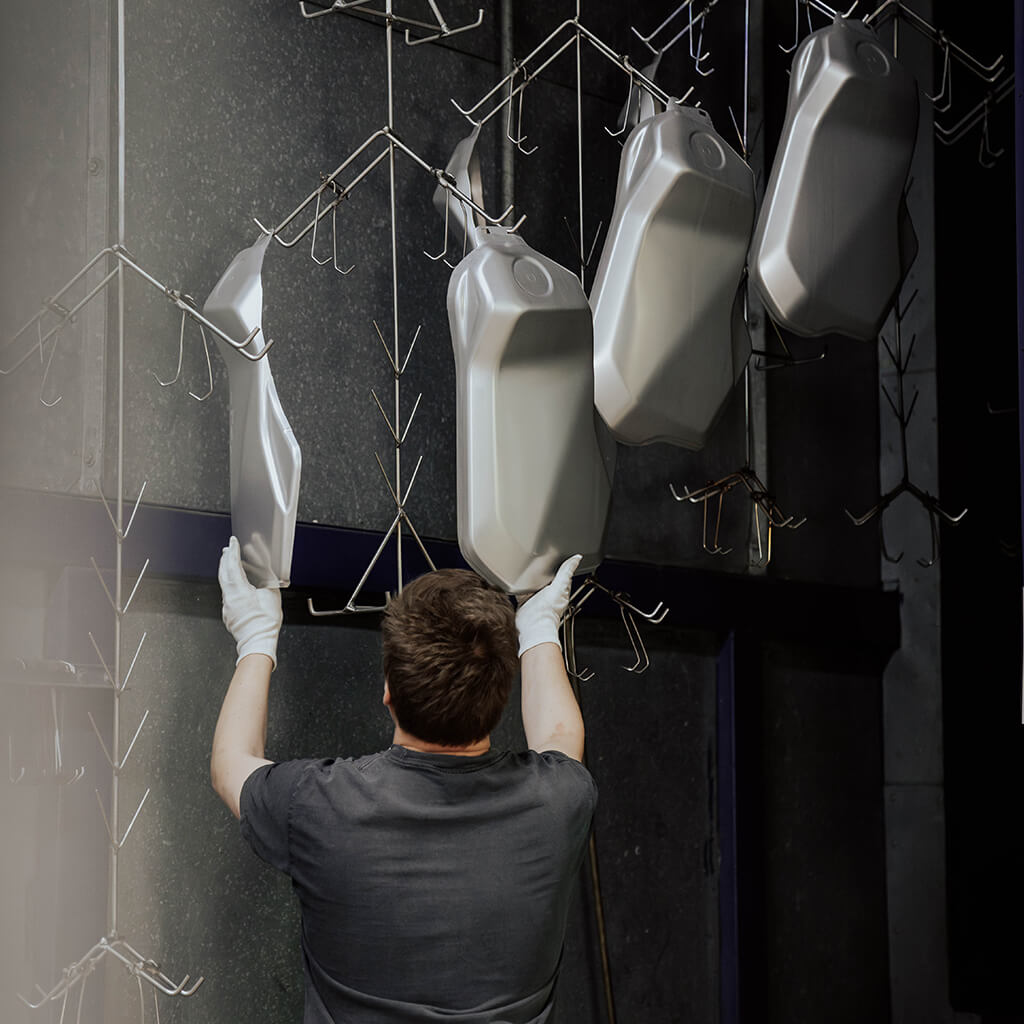
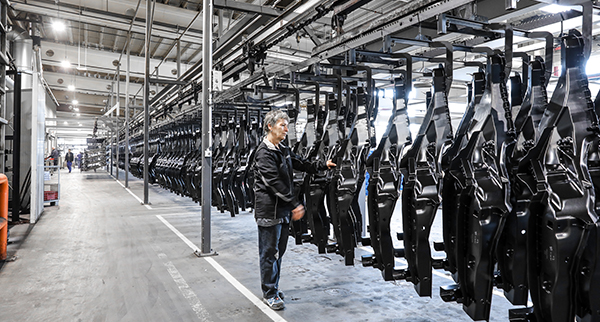
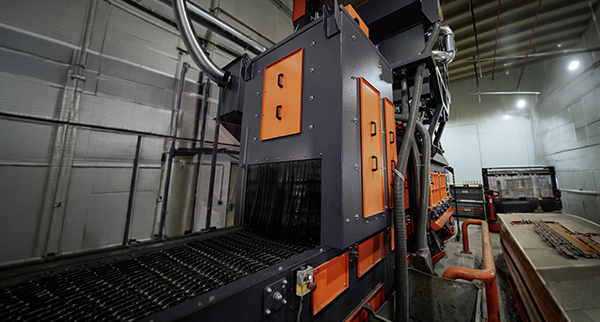
8-zone continuous spray line with downstream hot-air dryer.
Two-stage alkaline degreasing, rinse cascade with final deionised water rinse, etching, Alodine passivation and three-stage rinse cascade with deionised water.
The process meets the requirements of car manufacturers – specifically, compliance with the following standards and process specifications: VW TL 824 28, DBL 1175 and BMW PV 97022.
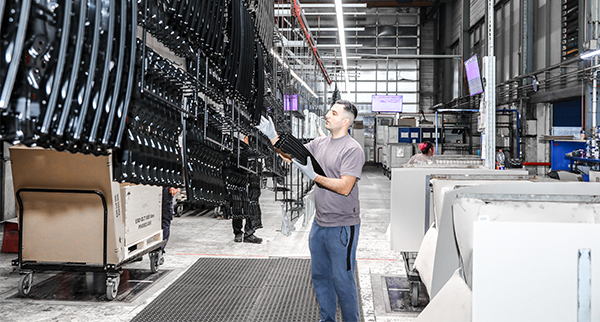
Etch passivation comprises several closely coordinated process steps. First, the workpieces are degreased, cleaned and rinsed several times. They are then etched to remove adhering oxide layers from the surface. In the final step, an Alodine conversion coating (passivation) is applied, which improves corrosion protection and can serve as a base for further surface coating.
The maximum part size is 1,800 × 2,200 × 500 mm.
Would you like more information about etch passivation? Robert Bähr and his team will be happy to help:
Robert Bähr, Head of Sales
Röthenstraße 21, 96247 Michelau, Germany
Phone +49 9571 898 31
robert.baehr@metob.de